Showing posts with label Character Development. Show all posts

Sunday, March 17, 2013

A Different Way to Look at Character Types


Rather than think of traditional character types as protagonists, antagonists, etc., let’s look at characters a different way.

There are three types of characters:

  • Those who influence, or change others
  • Those who are changed by others
  • Those who change within

Thinking about these three types of characters has caused me to think about my own role in life as well as the roles of those who are close to me. My guess is that, for most of us, our own roles change over time and circumstance, but for some, one of these three types of character is dominant. Think about yourself , others who you know well, and famous people who you have come to know through various media. Who are the people who cause change in others? Who are those who change because of the influence of others? Who do you know whose personal thoughts and characteristics have changed dramatically through introspection?

I need to consider how I will demonstrate these character types in the fictitious individuals in the writing that I create.

Sunday, April 15, 2012

The Story You Have to Tell: Writing from the Urgent Place


Today I attended a three-hour seminar with author Cheryl Strayed, whose book Wild just finished its third week on the New York Times Best Seller List. The seminar was held at the Lighthouse Writers Workshop in Denver, Colorado. Every session I have attended at the Lighthouse Writers Workshop has been excellent.

It is difficult to summarize a three-hour seminar because I cannot convey all the wonderful examples that were provided to illustrate the points of the author; instead, I will just list the general gist of the session.

Strayed highlighted several points:
  • Become the writer that you really are. (i.e., Don’t try to imitate others.)
  • Be bold enough to share very weird things that you think/do.
  • Trust that the risky, emotionally scary writing that you do is your best writing.
The author led the group through a series of exercises that you may want to try yourself or with your students. We were given about ten minutes to complete each assignment.
  • List all the things you want to write about.
  • Your story
    • What is the question at the core of your plot?
    • What is the universal question you want to ask? (Strayed came back to universal questions over and over again. It is the universal questions that allow the reader to identify with the incidents and emotions that the writer relates.)
    • What happened?
    • What is the meaning of what happened?
  • Write a piece where your character shows what he or she is feeling through actions. Don’t explicitly tell the reader what the character is feeling.
  • Choose a talisman (see below in bold) and write a piece incorporating that object. Use the talisman to express a universal emotion that is conveyed in your writing without explicitly describing that emotion.
Other points made by the author.
  • Find the extraordinary in the ordinary. (Common, everyday occurrences can be used to illustrate very broad themes. I kept thinking about how two things I enjoy—golf and mountain biking—can be used as metaphors for life.)
  • While fairy tales usually end with the line “...and they lived happily ever after,” your writing should end with the invisible, unwritten line, “...and nothing was ever the same again.”
  • Initially write everything, even the high risk things you probably wouldn’t want your family or friends to know. You can always scale back later. If writing a memoir, there are certain privacy issues you may have to consider, but don’t consider them until you have everything written down.
  • Consider your character’s
    • Ideal self—the image he has of himself
    • Actual self—the true reactions he has to a situation that, in reality, is probably quite different than his ideal self.
    • Code—what it is that your character personally thinks or thinks society requires of her. How might that change during the story?
    • Talismans—objects in the character’s life that may act as metaphors for a universal question or theme.
  • Writing can be a very emotional experience. During difficult scenes, the author often sheds a lot of tears.
  • Through the writing process, you may discover much about yourself. You may find that the writing helps you to see emotions and thoughts you have suppressed.
Strayed feels that there are many levels of writing. Beginning writers usually write only about the first levels of writing listed below. As a writer becomes more advanced, he moves deeper and deeper into the story, moving farther and farther down this list.
  • What happened
  • What it meant (the internal story)
  • What else does this remind you of?
  • What is the cultural story?
  • What is the ancient story? (Relating the writing to the stories and myths of old.)
  • What is the generational, racial, gender, etc. story?

Wednesday, March 7, 2012

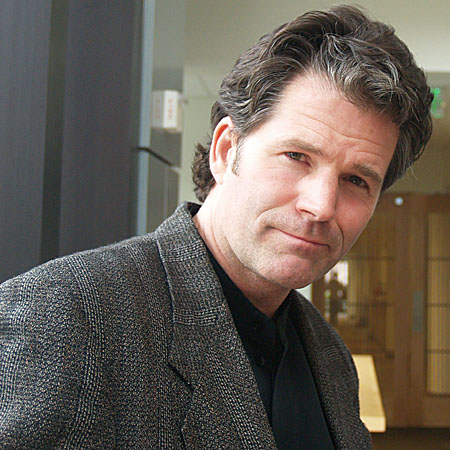
Writing Workshop with Andre Dubus III


I recently attended a three-hour workshop led by Andre Dubus III, author of House of Sand and Fog (which was made into a movie) and several other books.

Dubus had us do a number of writing exercises that concentrated on including lots of sensory detail. This was to illustrate his belief that stories should be character driven, not plot driven. According to the author, there are four methods of creating characters:
  • Looks—where the character lives and what is in his pockets.
  • Speech—what he says, how he says it, and what is not said.
  • Actions—gestures, how the character moves, what he does, and how he reacts to others.
  • Interior life—what he remembers and fantasizes about.
Indirectly, characters are developed by
  • what one character says about another.
  • the narrator telling you what’s happening.
Other things that I learned about the author’s writing techniques include the following. He
  • writes five days a week, though he didn’t say how long he writes each day.
  • reads poetry before he starts writing—I assume as creative inspiration.
  • doesn’t outline his stories before writing. He feels that outlines hamper his imagination.
  • feels that the storyteller should not ask what happened, but ask what it is like to be in a situation.
To be a good writer, Dubus feels that you must
  • have great curiosity about why man does what he does.
  • be emotionally truthful in your writing.
  • be comfortable staying in a state of uncertainty.
  • be willing to accept whatever comes as your story unfolds.
  • be willing to take risks and fail.
Here are examples of some of the writing exercises we did.
  • Picture a porch—list everything that comes to mind as you think of this porch. Review the list and then incorporate some of the items on the list into your writing.
  • Picture a room—list all of the objects you “see” in this room. Again, review the list and include the important objects into your writing. Remember to include the emotions that these objects evoke.
  • List ten people—go back and write at least three sensory images for each of those people. Choose one of the people and write about that person developing the sensory images.
After we finished each of these writing exercises, people read their pieces on a voluntary basis. It was amazing how much we learned about each person from his writing. The writing was so revealing because the participants took Dubus to heart and were very honest with their emotions.

I don’t think any of us experienced writer’s block. In fact, the vast majority of people had a difficult time stopping when it was time.
Wednesday, January 18, 2012

Comments from an Interview with Diane Setterfield


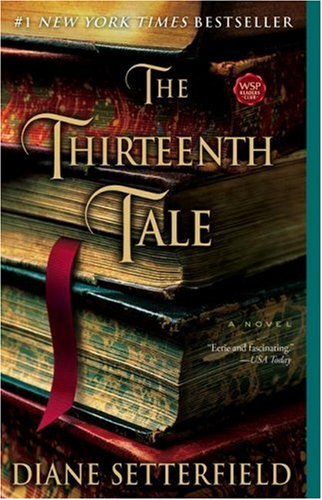
I just finished reading The Thirteenth Tale, which I enjoyed immensely. Every chapter was a cliff-hanger, and the book did not peter out near the conclusion. At the very end of the book is an interview with author Diane Setterfield. I am always interested in how other authors write, as there are so many ways to approach the craft. I want to share with you a few excerpts from the interview.

This book took three years to write and its real genesis was longer still: there was no single moment when I thought: ‘Aha! What a great idea!’ Rather there was a slow and gradual accumulation of numerous small ideas....

Once I had a voice and an event, I started to write scenes in a rather tentative, experimental fashion. Little by little I worked out what the story was by following my characters.

(Sounds to me like Setterfield started with some vague ideas. She wrote a variety of scenes that later wove themselves together.)

Does everyone have a story? Yes, yes, a thousand times yes. But it’s not always the one we think we have.

(I need to think about that last sentence some more. What story do I have to tell that is not the one I think I have?)

Margaret was the last character to fall into place...

(I find this very interesting. Margaret is the real storyteller in this book, yet she was the last character to be included.)

I vacillate about which of the many methods of writing I should use when authoring a book—especially a novel. Do I need to construct all of my characters and have a complete outline in place before writing or should I just write detailed scenes and events as they occur to me and then see how they fit into a story line?